 Emotional and Social Wellness: How Digital Health Is Transforming Holistic Healthcare
Health is not limited to physical well-being alone; emotional and social wellness are equally critical components of overall health. Emotional intelligence, empathy, positive relationships, and community support play a vital role in mental resilience, disease recovery, and quality of life. However, modern lifestyles, urbanization, and social isolation have increased loneliness and emotional distress across populations. Digital health is emerging as a transformative force in addressing these challenges by expanding access to emotional support, strengthening social connections, and integrating mental and social care into mainstream healthcare.
Importance of Emotional and Social Wellness in Healthcare
Emotional and social wellness influence:
- Mental health and stress management
- Coping with chronic illness
- Treatment adherence and recovery outcomes
- Workplace productivity and life satisfaction
Loneliness and social isolation are now recognized as major public health concerns, linked to increased risk of depression, cardiovascular disease, and premature mortality. Addressing these issues requires scalable and accessible solutions—an area where digital health plays a crucial role.
Role of Digital Health in Emotional Well-being
Digital Mental Health Platforms
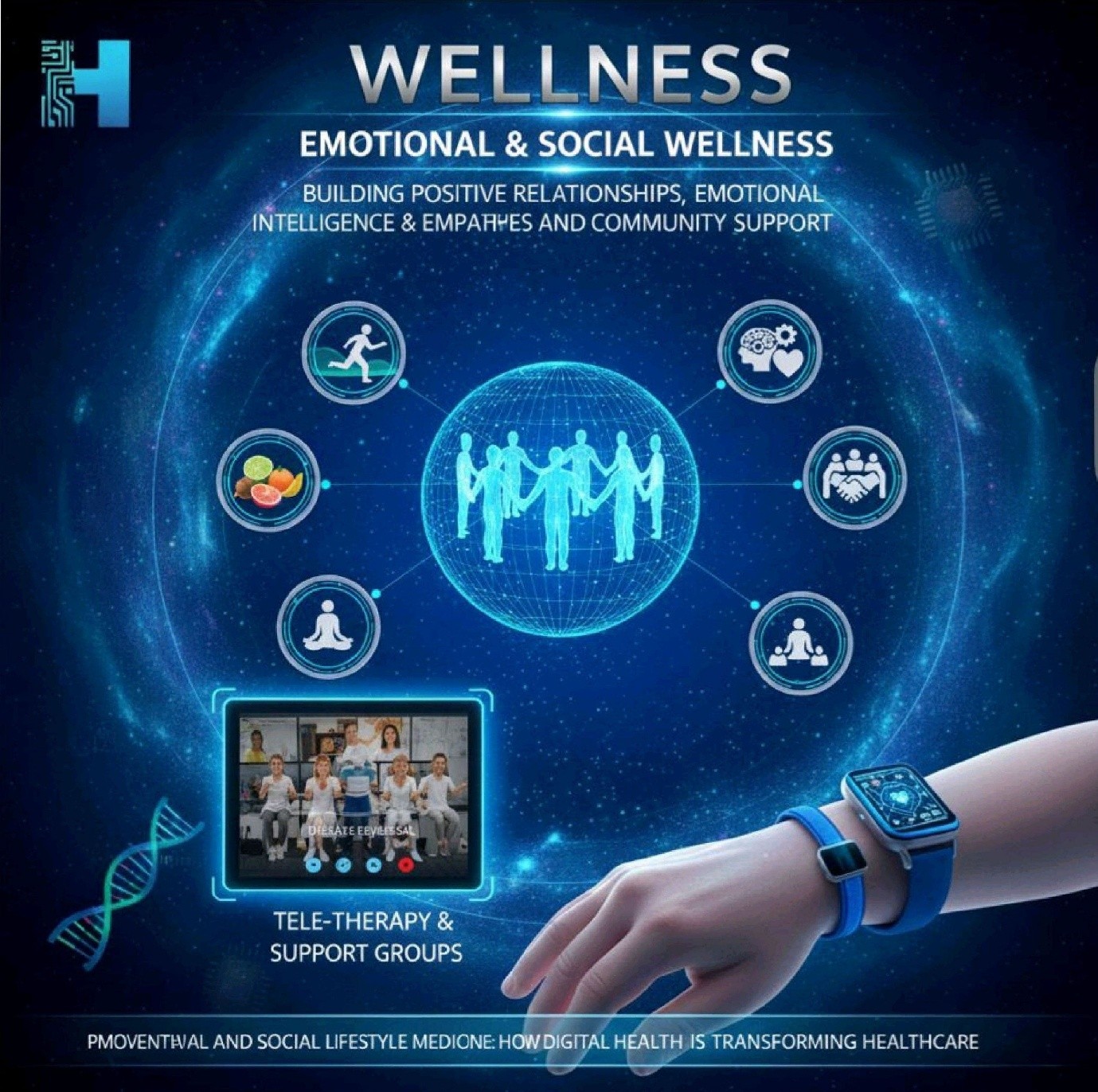
Digital mental health platforms provide online counselling, therapy, and emotional support through mobile apps and teleconsultations. These services reduce stigma and improve access to mental healthcare.
- Virtual therapy and counselling sessions
- AI-based emotional check-ins and mood tracking
- Crisis support and early intervention tools
These platforms enable early identification of emotional distress and timely support.
Emotional Intelligence and Empathy Through Technology
Digital health tools support the development of emotional intelligence (EI) and empathy by:
- Offering guided self-reflection and mindfulness programs
- Providing emotional awareness assessments
- Training healthcare professionals in empathetic communication through virtual simulations
For healthcare providers, digital empathy training improves patient experience and trust, strengthening patient–provider relationships.
Building Positive Relationships Through Digital Platforms
Digital health technologies foster positive social connections by:
- Creating online peer support communities
- Enabling group therapy and wellness sessions
- Supporting family involvement in patient care through digital updates
For patients with chronic diseases or elderly individuals, digital platforms help maintain meaningful social engagement and reduce feelings of isolation.
Addressing Loneliness Through Digital Health
Community-Based Digital Support
Digital health connects individuals to community resources, support groups, and social services.
- Online communities for mental health, chronic illness, and caregiving
- Digital volunteering and mentorship programs
- Virtual social activities for seniors and vulnerable populations
These platforms create a sense of belonging and shared experience.
Remote Monitoring of Emotional Well-being
Wearables and mobile apps can track indicators related to emotional health such as sleep patterns, activity levels, and stress markers. Changes in these indicators can signal emotional distress, prompting timely intervention.
Indian and Global Perspectives
Indian Context
In India, digital mental health platforms are helping bridge gaps caused by limited mental health professionals and social stigma. Tele-counseling services, wellness apps, and NGO-led digital communities support emotional well-being among students, working professionals, and older adults. Government initiatives integrating mental health services into digital health platforms are expanding access across urban and rural areas.
Global Context
Globally, countries like the UK, US, and Australia are integrating digital mental health solutions into primary care and workplace wellness programs. Online peer support networks and digital community platforms are widely used to combat loneliness, especially among elderly populations.
Impact on Healthcare Systems
Integrating emotional and social wellness through digital health leads to:
- Improved mental health outcomes
- Enhanced patient satisfaction and trust
- Better chronic disease management
- Reduced healthcare utilization due to early intervention
- Stronger community-based care models
By addressing emotional and social needs, healthcare becomes more holistic and person-centered.
Challenges and Ethical Considerations
Despite its potential, digital emotional health faces challenges such as:
- Data privacy and confidentiality concerns
- Digital divide and accessibility issues
- Need for human oversight in AI-driven emotional tools
- Risk of over-reliance on technology
Balanced integration of technology with human compassion is essential.
Conclusion
Emotional and social wellness are fundamental to healthy individuals and communities. Digital health has the power to transform healthcare by expanding access to emotional support, strengthening empathy and relationships, and reducing loneliness through community engagement. When thoughtfully integrated, digital health complements human care, creating a more compassionate, connected, and holistic healthcare system that addresses not only disease, but the emotional and social dimensions of well-being.